6 May 2026
The UK salon industry is changing faster than at any point in the last decade.
What used to be a simple business built around appointments, walk-ins and word-of-mouth has evolved into something far more complex and far more competitive.
Today’s salon owners are balancing:
At the centre of all of this sits one thing:
salon software.
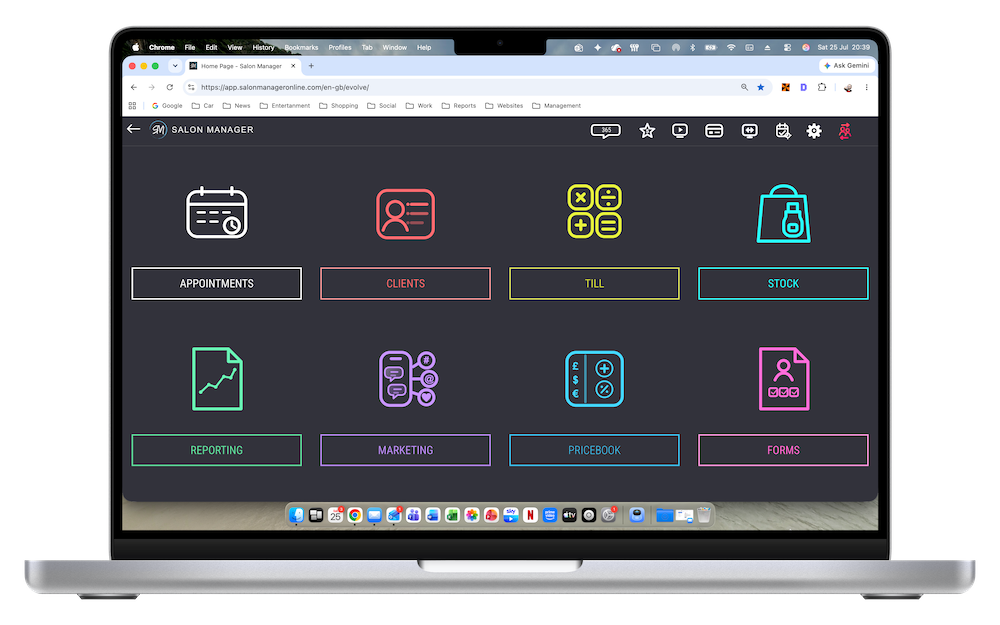
In 2026, salon software is no longer just a booking diary. It has become the operating system of the modern salon.
And salons that embrace technology are beginning to pull away from those still relying on outdated systems and manual processes.
There’s no denying the beauty industry remains strong in the UK.
Clients still prioritise self-care, beauty and wellness, even during uncertain economic times. In fact, many salon owners are seeing premium services continue to grow despite wider cost-of-living concerns.
But behind the scenes, many salons are struggling with profitability.
Common issues include:
For many salon owners, the diary may look busy but profits don’t always reflect it.
That’s forcing the industry to rethink how salons operate.
The modern salon client behaves very differently compared to just a few years ago.
Today’s clients expect:
In many ways, salons are now competing with the convenience standards set by companies like Amazon, Uber and Deliveroo.
And if booking with a salon feels difficult, slow or outdated, clients simply move on.
Many salon clients now expect the option to book online rather than calling directly. That shift has changed how successful salons manage bookings, client communication and availability.
That shift alone has transformed how successful salons operate.
Ask almost any salon owner what frustrates them most and the answer is usually the same:
no-shows and last-minute cancellations.
An empty chair doesn’t just lose the service revenue.
It also impacts:
Missed appointments and last-minute cancellations can cost salons significant revenue over time, especially without reminders, deposits or clear cancellation policies.
This is one of the biggest reasons salon software has become essential.
Modern systems now use:
The result?
Fewer gaps in the diary and more predictable revenue.
Artificial Intelligence is becoming one of the biggest shifts happening inside the salon industry right now.
Not in the “robots replacing hairdressers” sense.
But in the operational side of running a salon.
AI is now helping salons:
Many salon owners are surprised by how much admin time automation can remove from the business.
Instead of spending hours:
AI systems can now handle large parts of this automatically.
For independent salons especially, this creates a huge advantage.
Because smaller salons can now operate with the efficiency of much larger businesses.
Another major shift in the UK salon industry is the rise of freelance and self-employed stylists.
Traditional commission-based salon structures are changing rapidly.
More professionals now want:
Technology has accelerated this shift dramatically.
Online booking systems, mobile payments and social media have made it easier than ever for stylists to manage their own client base.
As a result, salon owners now face a new challenge:
not just attracting clients —
but attracting and retaining talented staff.
This means salon software increasingly needs to support:
The industry is evolving fast.
The salons performing best right now are not necessarily the biggest.
They are the salons that:
Successful salons are treating software as an investment rather than a cost.
Because the right salon software can help:
The industry is moving from “busy” salons to “efficient” salons.
And that’s a huge difference.
Over the next few years, salon software will continue evolving beyond basic appointment booking.
We’re already seeing systems move towards:
The most successful salon systems will become true business-growth platforms — not just digital diaries.
And salons that adopt these tools early will likely gain a significant competitive advantage.
The UK salon industry is entering a completely new era.
Clients expect more.
Competition is increasing.
Margins are tighter.
And salon owners are being asked to wear more hats than ever before.
But there’s also enormous opportunity.
The salons embracing technology, automation and smarter systems are finding ways to:
In 2026, salon software is no longer a luxury.
It’s becoming one of the most important business decisions a salon owner can make.
And for many salons across the UK, the difference between surviving and thriving may come down to the systems running behind the chair.
Written by the Salon Manager team · Reviewed by Rikki Tronson, General Manager · Last updated: 10 June 2026